27 Mar 2026
CEFR Levels Explained: A Complete Guide from A1 to C2
What is CEFR?
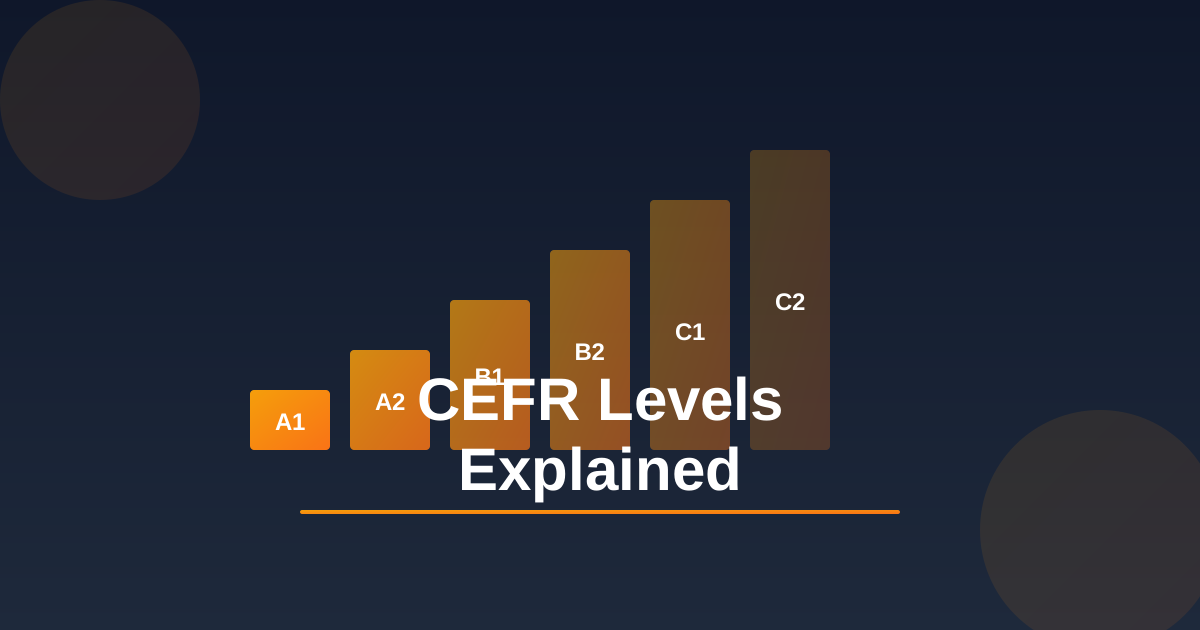
The Common European Framework of Reference for Languages (CEFR) is an international standard for describing language ability. It uses a scale from A1 (complete beginner) to C2 (near-native mastery), and it's used by language schools, employers, and certification bodies worldwide.
Understanding where you are on this scale helps you choose the right learning materials and set realistic goals.
A1 — Beginner
At A1, you can understand and use basic everyday expressions. You can introduce yourself, ask simple questions about personal details, and interact in a basic way if the other person speaks slowly.
Reading at A1: Short, simple texts with familiar words. Think headlines, basic descriptions, and simple instructions. Browse A1 articles on EsGo.live to see what this level looks like in practice.
A2 — Elementary
A2 learners can understand sentences about areas of immediate relevance — shopping, local geography, employment. You can describe your background and immediate environment in simple terms.
Reading at A2: Short texts on familiar topics like travel, food, and daily routines. Sentences are longer but grammar stays straightforward. Explore A2 reading practice.
B1 — Intermediate
This is the "breakthrough" level. B1 speakers can deal with most situations while traveling and can describe experiences, events, dreams, and ambitions. You can give reasons and explanations for opinions.
Reading at B1: Adapted news articles with broader vocabulary. You can follow the main points of clear standard text on familiar matters. Try B1 articles.
B2 — Upper Intermediate
At B2, you can interact with a degree of fluency and spontaneity that makes regular interaction with native speakers quite possible. You can understand the main ideas of complex text on both concrete and abstract topics.
Reading at B2: Authentic news articles, opinion pieces, and analysis. The language is more nuanced with idiomatic expressions. Challenge yourself with B2 content.
C1 — Advanced
C1 speakers can express ideas fluently and spontaneously without obvious searching for expressions. You can use language flexibly and effectively for social, academic, and professional purposes.
Reading at C1: Long-form journalism, editorial commentary, and specialized reporting with natural, unfiltered language. Read C1-level news.
C2 — Mastery
The highest CEFR level. C2 speakers can understand virtually everything heard or read. You can summarize information from different sources, reconstructing arguments and accounts in a coherent presentation.
Reading at C2: Native-level content with no simplification — editorials, literary journalism, and expert analysis. Experience C2 articles.
How to Find Your Level
The best way to assess your reading level is to try articles at different levels and see where you feel challenged but not lost. A good rule of thumb: if you understand about 80% of the words without help, you're at the right level.
Start browsing articles on EsGo.live — try a few levels and see what feels right. You can always adjust as you improve.
Keep learning
Practice your Spanish with real, leveled news articles — vocabulary, translations, and discussion questions included.
View articles